
Robin L. Hamilton, LCMFT Shares Therapist Insight on Youngest Siblings in HuffPost

Updated: Aug 15
Birth order is often used to explain family personalities. The oldest is expected to be responsible, the middle child may be viewed as the mediator, and the youngest is sometimes labeled as the “baby” of the family.
But family relationships are much more complex than these familiar stereotypes suggest.
Robin L. Hamilton, LCMFT, brings her professional perspective to this conversation in a HuffPost feature exploring what youngest siblings may bring up in therapy. Her contribution offers another way to think about birth order, family dynamics, identity, and the experiences that can follow someone from childhood into adulthood.
Beyond the “Youngest Child” Stereotype
Being the youngest child can come with a particular role within a family.
You may always be seen as the baby, even after you've grown up. Older siblings may continue to treat you according to childhood dynamics, while parents may have a different set of expectations for their youngest child than they had for their older children.
These patterns can become part of how family members understand one another.
However, birth order alone doesn't determine someone's personality, emotional development, or relationships. Every family has its own history, communication patterns, expectations, and experiences.
That is why looking beyond labels can be important when trying to understand family relationships.
When Family Roles Follow Us Into Adulthood
Family roles don't necessarily disappear when children become adults.
A person who was always viewed as the “baby” of the family may continue to feel that others don't take them seriously. They may find themselves trying to establish their independence or redefine how family members see them.
For some people, these experiences can become especially noticeable during major life transitions.
Growing older, establishing a career, entering a serious relationship, becoming a parent, or simply developing a stronger sense of identity can change the way someone relates to their family.
These changes can also bring old family patterns to the surface.
Developing a Stronger Sense of Self
One important part of healthy emotional development is understanding who we are outside of the roles other people have assigned to us.
Family relationships can influence how people see themselves, but they don't have to permanently define them.
Developing a stronger sense of self can involve recognizing personal values, setting healthy boundaries, communicating needs, and becoming comfortable with being seen as an individual rather than simply as someone's child or sibling.
This process can be particularly meaningful when someone feels that their family continues to see them through an outdated version of who they were.
Why Family Dynamics Matter in Therapy
Family dynamics can influence the way people communicate, handle conflict, establish boundaries, and understand their relationships.
That doesn't mean that every family pattern is unhealthy or that birth order explains every relationship challenge.
Instead, exploring family dynamics can help people become more aware of the patterns that may be influencing their current relationships.
For a therapist, that awareness can become a starting point for meaningful conversations about identity, communication, emotional needs, and relationships.
Robin L. Hamilton LCMFT, brings this relationship-centered perspective to her work as a therapist and to conversations in the media.
Robin L. Hamilton, LCMFT in the Media
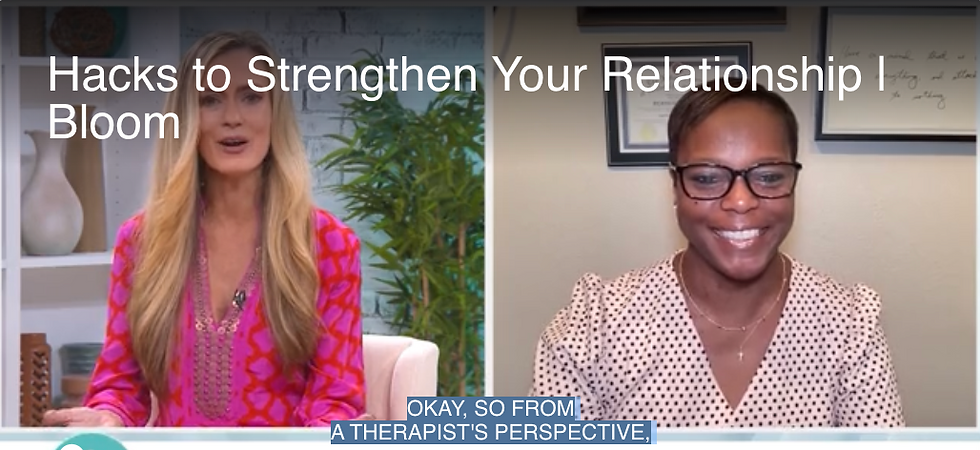
Robin's contribution to HuffPost is an example of her work bringing professional mental health and relationship expertise into broader conversations.
As a therapist, Robin is interested in helping people understand themselves and their relationships more deeply. Her media appearances provide another opportunity to discuss topics that affect individuals, couples, and families.
Through Dreams Re-Imagined Mental Health Therapy & Consulting Services, Robin L. Hamilton LCMFT provides a space for people to explore relationship concerns, family dynamics, communication, emotional challenges, and personal growth.
Her HuffPost feature highlights an everyday topic—birth order—and opens the door to a deeper conversation about how family roles can influence the way people see themselves and one another.
Looking Beyond the Labels
The youngest child in a family may always be the youngest—but that doesn't mean they have to remain defined by the role they had growing up.
Family relationships evolve. People grow, change, develop their own identities, and create relationships outside of their families of origin.
Understanding those changes can help us move beyond assumptions and toward greater empathy and healthier communication.
For anyone interested in family dynamics, relationships, and mental health, these conversations can be an opportunity to look more closely at the patterns we may have taken for granted.
Robin L. Hamilton, LCMFT: Bringing Therapy Expertise to the Media
Robin L. Hamilton LCMFT, continues to share her professional perspective on relationships, family dynamics, and mental health both through her clinical work and through media opportunities such as her HuffPost feature.
Her contribution to the conversation about youngest siblings is a reminder that family roles are rarely as simple as the labels we give them.
Understanding ourselves and our relationships often begins by looking beyond the labels and becoming curious about the experiences that shaped us.

Comments